Chronicle the Second · On the Great Silence
What Happens If the Internet Goes Down?
Subjects ask: sire, could the internet simply stop? Subject, it stopped. Last Tuesday, the whole of it, kingdom-wide, for one entire day. This is the true record of that day, and of how civilisation held. Barely. By pigeon.
The morning of the Silence
It began as these things always begin: somewhere, an engineer changed one setting. The great empires of history fell to armies, plagues and ambitious cousins. Ours fall to a typo. The court has verified this is not even rare. One delivery company once vanished half the web before the kettles boiled, over a single customer's configuration. A social empire once erased itself from the internet's map so thoroughly that it reportedly locked its own staff out of their own buildings, which remains the funniest thing infrastructure has ever done, and infrastructure has done the fax machine.
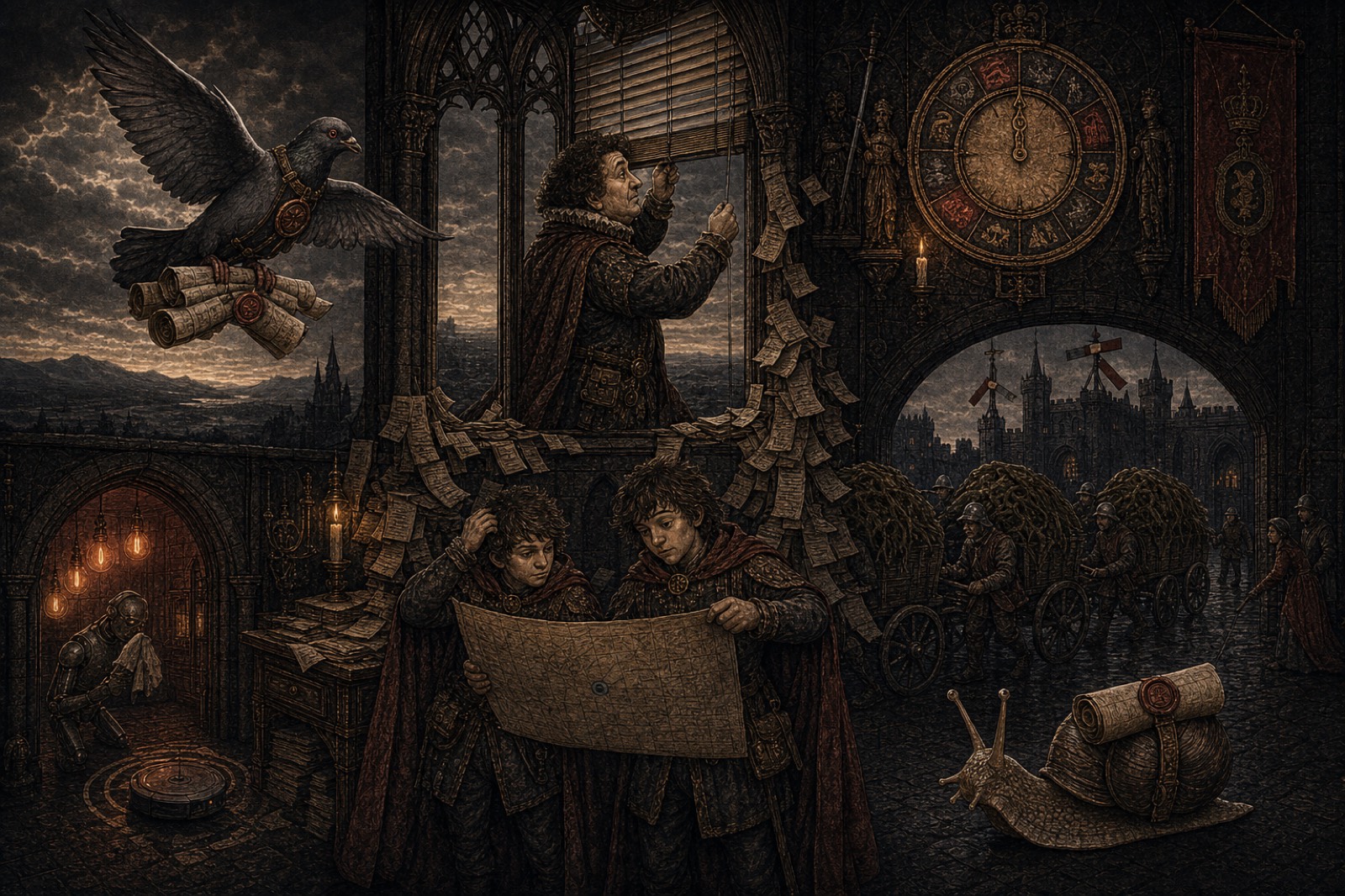
The King woke to stillness. The smart bulbs, severed from their homeland, had defaulted to a colour the court has since named "regret". The thermostat sulked at an unexplained nineteen degrees. The vacuum did slow, grieving laps of the great hall, its employer unreachable, its map undeliverable. Only the Doom Clock stood firm at 23:58, as it has for forty years, our one service with perfect uptime, on account of being painted on.
The kingdom adapts, badly
By the second hour the tills of the realm were silent, for modern money is a rumour that requires connectivity. The young princes were issued the emergency paper map and held it sideways, asking where the blue dot was. There is no blue dot, my princes. You are the blue dot. It was a difficult day for everyone.
The fridge, cut off from its yoghurt sponsor, kept things cold in bitter silence, exactly as its ancestors did, and somehow resentfully. The learned produced their short dull scroll, cash in the house, the important numbers on paper, maps downloaded while the downloading was good, and read it aloud to the court. It received, as always, no applause. It worked, as always, completely. The court has never forgiven it for either.
The correspondence of the crowns
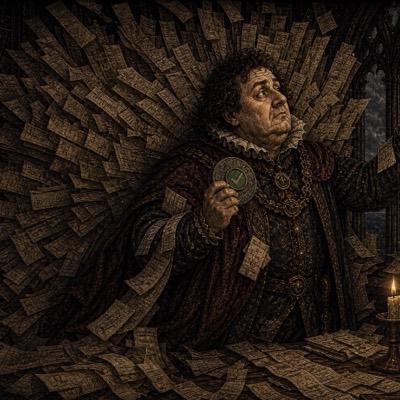
Now to the true crisis. The Duke of a Thousand Tabs, deprived of all thousand, was discovered at his window, refreshing the horizon. And both crowns faced the same unbearable question: without the internet, how was one to receive the morning edition of the Daily Paddock, the realm's journal of horsey news, and learn whether Staple's column had run? Staple's column consists of one word, and the word is "no", but one likes to see it printed. It anchors the day.
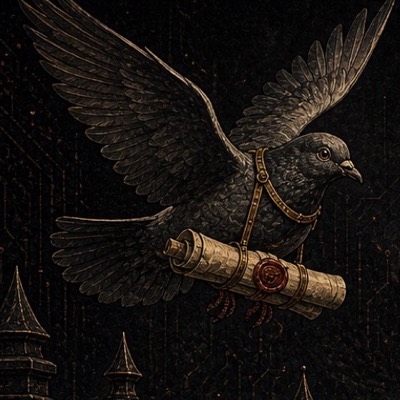
The court rose to the hour. The ancients, in their wisdom, left us RFC 1149, a true scroll describing with a straight face how to send internet packets by carrier pigeon. Written as a jest. Filed by this court as a standard. The royal loft went to combat readiness, and Gateway, our finest, delivered the Paddock's front page in strips, nine hours per strip, the crossword arriving pre-chewed, which the court has ruled counts as solved. The column had run. The word was "no". The kingdom exhaled.
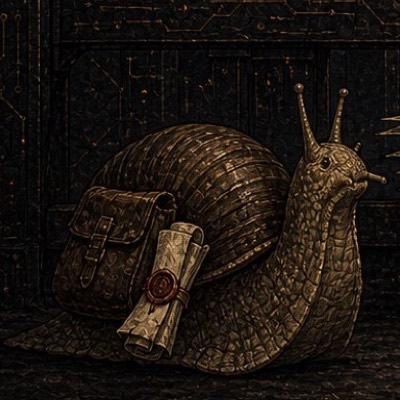
The Duke, meanwhile, attempted flag semaphore from his tower. His message, SEND HELP, was read by the royal observers as SEND KELP, and the court, eager to oblige a neighbour in crisis, dispatched four wagons of it. The Duke, too proud to correct the error, wrote back thanking us for the kelp, requesting more kelp, and praising kelp generally, and our two houses now conduct relations on a foundation of kelp neither can acknowledge. The historians are calling it diplomacy. Sir Reginald the carrier snail, it must be said, was unaffected by the entire Silence, having always been offline. He is currently delivering an URGENT missive from the spring. Nothing can slow him. Nothing has been able to since the coronation.
The Silence ends
At dusk the distant engineer un-changed the setting, and the internet returned, sheepish, pretending nothing had happened. The bulbs chose regret again, this time voluntarily. The Duke opened nine hundred tabs at once "to see what he had missed", and across the valley the court heard his machine sigh like a horse asked to jump one more fence. Which reminds the court: the whole internet, subject, cannot truly die. It has no single heart to stop. It is ten thousand candles, and every week somebody's row goes dark, and the world calls it an apocalypse until teatime.
When your row goes dark, subject, light the real candles, fetch the board games, and trust the loft. The Paddock always arrives. The column is always "no". Civilisation, in the end, is simply knowing that it will be.