Chronicle the Twelfth · The Catalogue
How Do I Get Into Cybersecurity?
A young subject wrote to the court asking how one gets into cybersecurity. The court, delighted, began preparing a ceremony. The Apprentice declined the ceremony on the young subject's behalf, took out her book, and said she would handle this one. This chronicle concerns the book, subject, and the court is still deciding how it feels about the book.
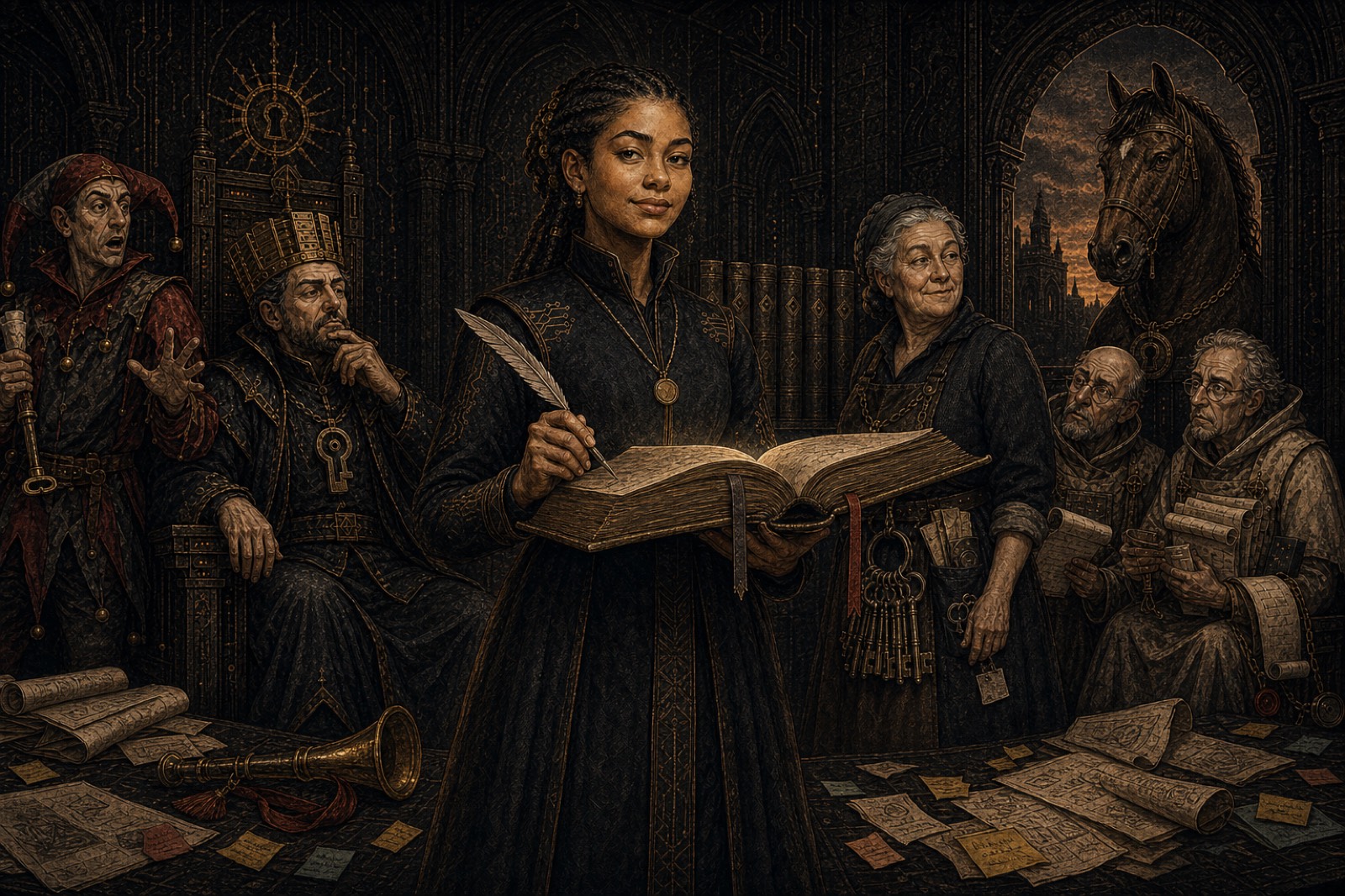
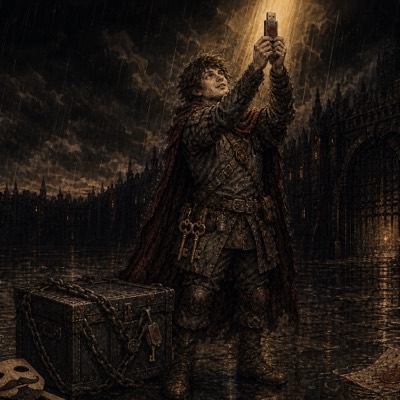
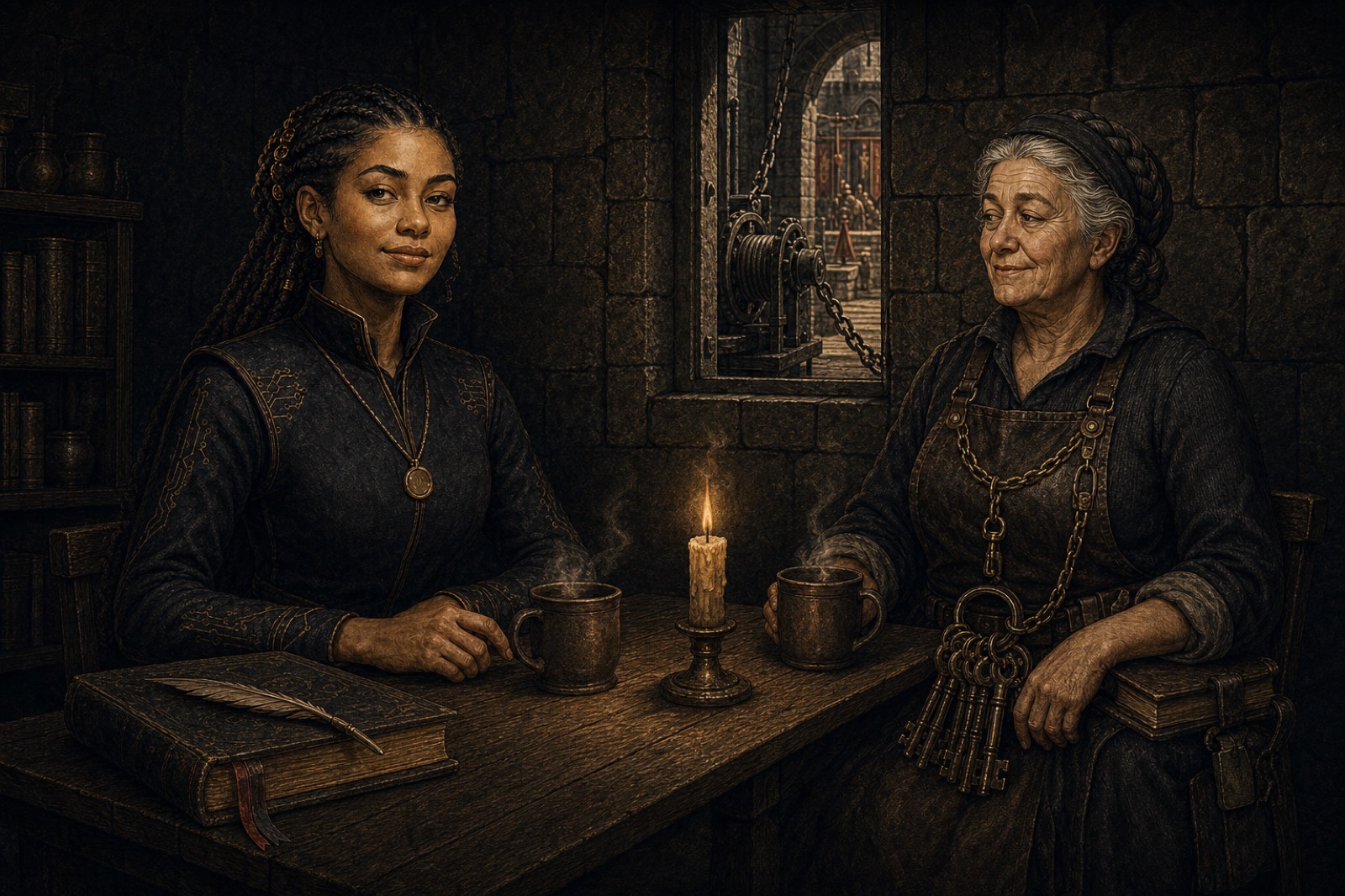
Understand first who the Apprentice is. Nia arrived at court two years ago with one question, stayed because the questions multiplied, and apprenticed herself, since nobody thought to assign her, to the entire kingdom. She is young enough that the learned checked her credentials twice, and sharp enough that they have not checked anything of their own since without wondering what she would say. The court is in awe of her. She, in turn, is in awe of exactly one person in the kingdom: Dame Maud, her mentor, whom she watched fix the drawbridge once and has quoted in the Catalogue ever since. The two of them take tea on Fridays in a silence that gets more work done than the privy council, and the court, which understands neither of them, understands completely that the kingdom's present and its future have an arrangement.
The accidental curriculum
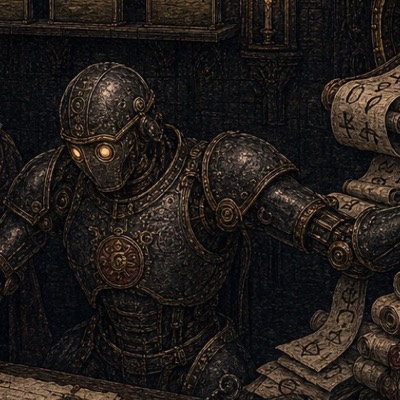
Her method is the Catalogue: a plain book in a firm hand, in which the entire court has been, without its knowledge or consent, a faculty. For the kingdom, subject, is a syllabus that does not know it, and she is its first honest student.
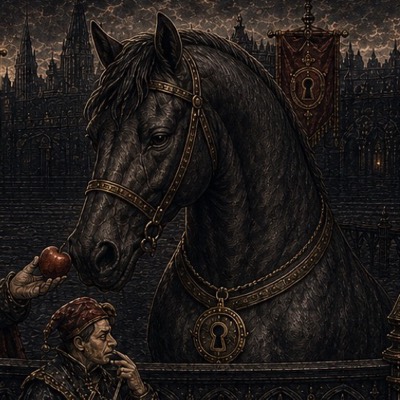
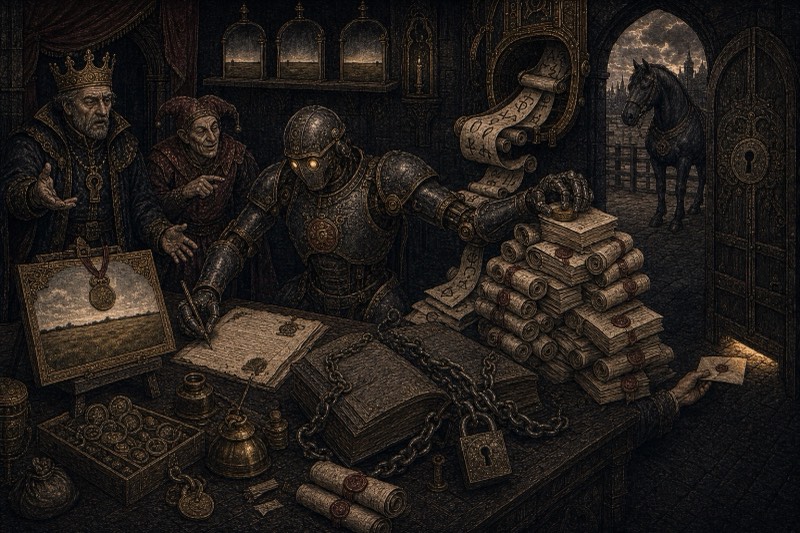
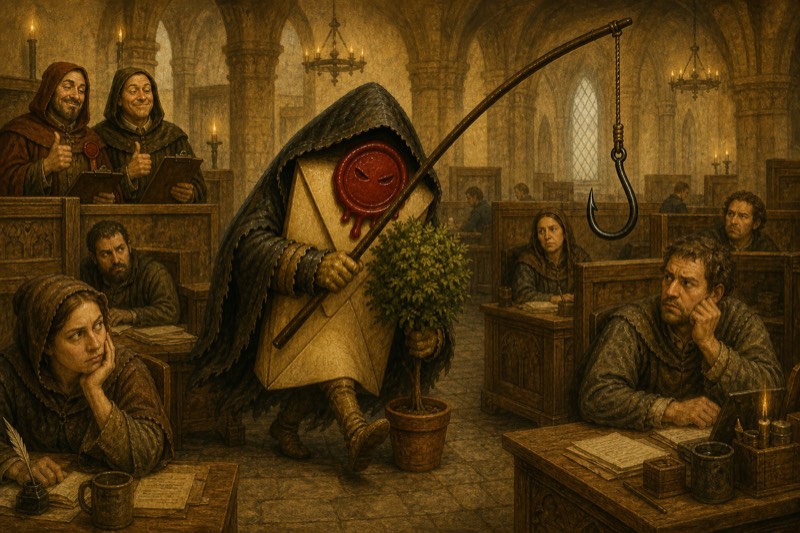
The Idiot Admin taught her everything about access control, by having all of it. The Squire teaches her phishing, by demonstration, twice weekly; she has asked him never to change, and he has assured her, radiantly, that he cannot. Gerald delivered a masterclass in prompt injection with a single courteous bow. The Duke of a Thousand Tabs is her entire module on incident response, in the sense that he is an incident, and he responds. And Staple taught her the power of "no", which she respects, and has catalogued, with the note: "a policy, not a strategy". The horse read the entry over her shoulder and neighed once, pre-emptively, an approval he has extended to no other living courtier.
The face of change
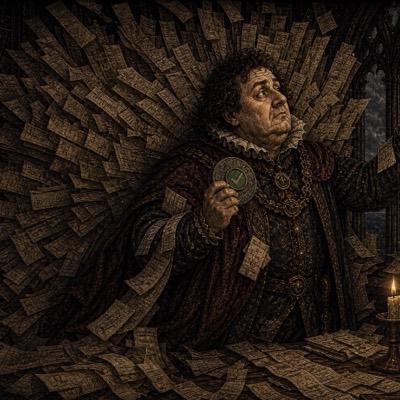
Her frustration with the court is a matter of public record, chiefly because she files it. She proposed that the gates trust nothing by default, and the court, in awe, adopted the idea at once, as a ceremony, with trumpets, called the Feast of Trusting Nothing. She took a measured breath. The council adjourned on its own initiative; the council has learned what the breath means. By evening the ceremony was abolished and the actual gates actually trusted nothing, and the trumpets, who had rehearsed, were given the night off to think about the difference.
This is her power, subject, and the court basks in it resentfully: she says "interesting" and strategies die where they stand. She says "why" up to four times in sequence, which no royal initiative has yet survived. The learned call her the future of the profession. She has asked them to stop, on the grounds that the future should not be one person, and wrote Entry 200 while saying it.
Sire, the Apprentice has catalogued me. I demanded to see the entry. It reads, in full: "The Fool: working as intended." Sire, in forty years of professional objection, it is the finest review I have ever received, and I object to how much it pleased me.
The answer
And the young subject's question? The court's ceremony would have run four hours. The Apprentice wrote one line, sent it, and returned to her book:
"Watch everything. Write it down. Ask why until they send you to Maud. You do not need anyone's permission to begin, subject. I did not ask for mine."
One day, the court assumes, the throne will offer her Staple's title, and the succession of the realm will be settled. She has heard the assumption. She smiled at it the way Maud smiles at Februaries, and said only that the role is a floor, not a ceiling. Nobody knows what her plans are. The Catalogue knows. The horse has read it over her shoulder. The horse is not talking, subject. The horse has never once talked, and in this matter especially.
The court watches her the way sailors watch the dawn, subject: gratefully, and with the uncomfortable knowledge that it does not need our permission either. The kingdom she is cataloguing will be replaced by the one she is writing. The King has read Volume VII. The King, between us, cannot wait.