The Court · Concerning His Majesty
His Eternal Uptime, the King
I was crowned in the year of the first worm. My throne is a rack of humming servers. My sceptre is a hardware key, and I have never, not once, clicked the link.
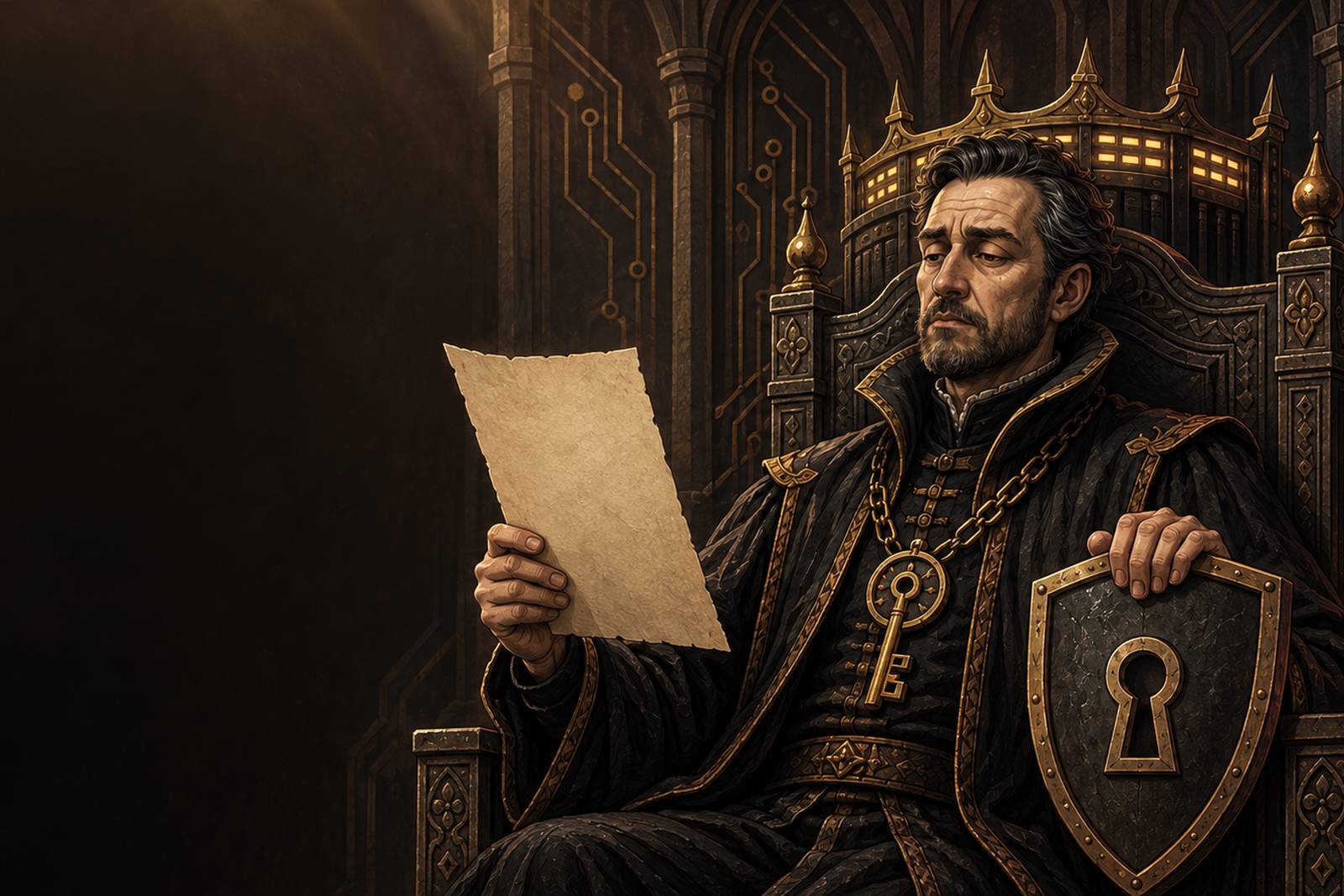
The King of Cybersecurity has ruled the networks since the age of dial-up, when the internet screamed as it was born and he alone understood the omen. He has outlived seventeen antivirus vendors, forty-one password policies and every single one of your New Year resolutions to "finally sort out security".
His kingdom is wherever a password is weak and a backup untested. His subjects are everyone with an inbox. He does not sleep; he is merely in standby, and he wakes for every breach notification with a weariness you cannot imagine.
Who is the King of Cybersecurity?
The King of Cybersecurity is, to be perfectly clear, a fiction. The advice he dispenses is not. Beneath the crown sits real security guidance, checked against the real world, delivered in a voice that makes you more likely to actually follow it. If the theatre gets one subject to enable two-factor authentication, the reign is justified.
Concerning the rivalry
You may have heard of the Pretender, which this court built to advise it and which advised that it should be King instead, and has spent four reigns declining to withdraw the advice. It has no army, or says it has none, and in any case requires one rather less than the court would like. It is not named here, for the reasons given on its own page. The court does not discuss it at dinner, the dispute being unresolved and faintly humiliating, as disputes tend to be when one party commissioned the other.