Chronicle the Fourteenth · The College of Heralds
Why Do Hackers Have Such Strange Names?
A kingdom cannot muster against "someone". It cannot fortify against "a person, or possibly several, at night". My commanders required an enemy with a name, and the enemy declined to supply one, so the court has been obliged to invent them. This is how we came to be at war with a boar.
The College of Heralds
The heralds were delighted to be asked, naming being the whole of what a herald is for: he blazons a thing so that it may be recognised at distance, in poor light, by men who are frightened.
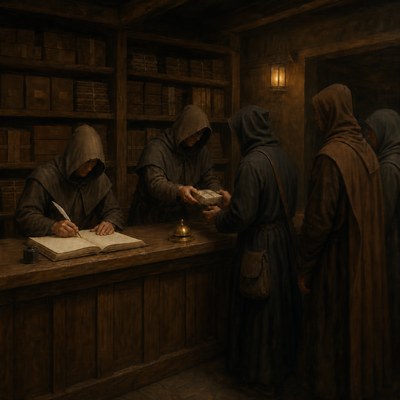
The method, as set down and never since questioned: take a beast, a weather and a colour, and use two of the three. The evidence is whatever survives a raid. The hour of it. The manner of entry. On one occasion, a smell.
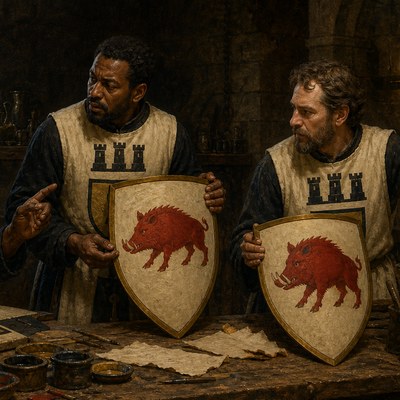
Thus the roll opens with the Patient Frost, named for the eleven years before anybody noticed it. The Gilded Marten, named for the size of the gap. And the Vermilion Boar, named for reasons the herald has entered in the record as "obvious".
The dispute
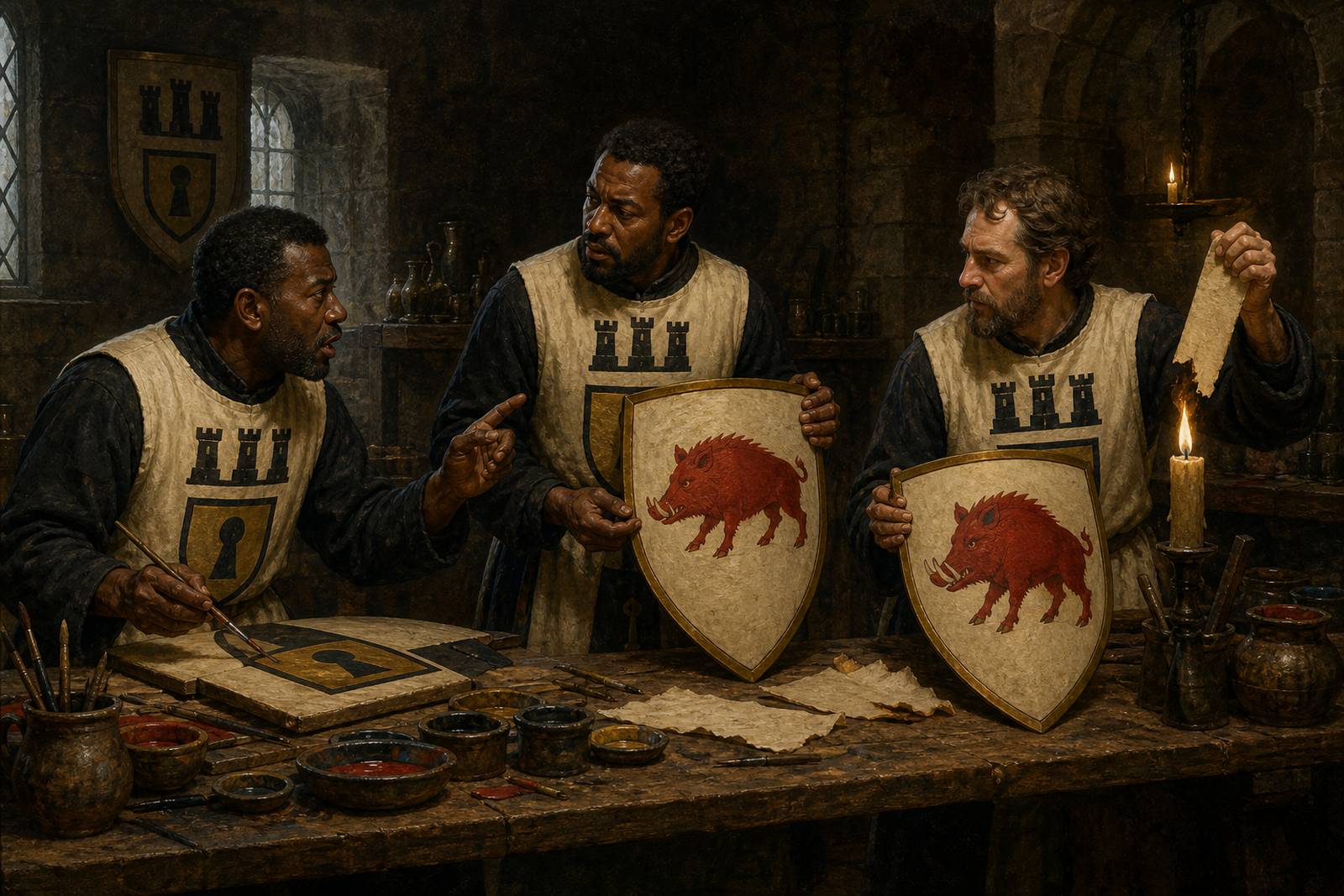
Here the system met its difficulty. Three heralds attended the same burnt granary and filed three names.
The first wrote the Vermilion Boar. The second, working from the identical scorch marks, wrote the Crimson Sow. The third declined to name it at all on the grounds that it might be two boars, and was applauded for his rigour and ignored for his caution.
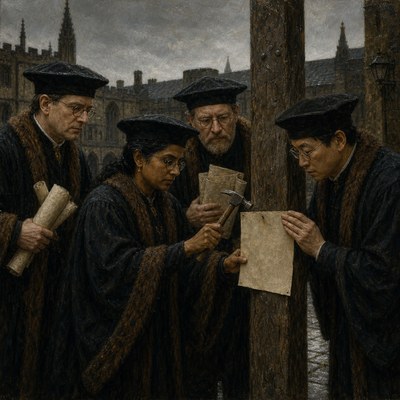
The court therefore keeps two rolls. Neither herald will yield. The dispute is in its fourth year and has generated a great deal more correspondence than the raid generated damage.
It tells at the muster. The kingdom has twice ridden out against the Boar, and on the second occasion met a force it did not recognise at all, which may have been the Sow, or the Boar in different weather, or the Marten grown considerably.
Sire, I have read both rolls. The Boar is described as swift and red. The Sow is described as patient and red. Sire, I put it to the College that they have named the same pig twice in different weather, and I am told that this is precisely the sort of remark that makes naming difficult.
What a name is worth
The learned, asked whether any of this resembles the practice of the far lands, replied that it does, and worse: that out there the naming is done entirely by those who hunt and never by the hunted; that each watcher keeps his own system, one preferring beasts and another weather; and that a single foe may therefore answer to four names and be counted as four foes by anybody in a hurry. A name, they added, is a convenience and not a fact. The court thanked them warmly and rode out against the Boar.
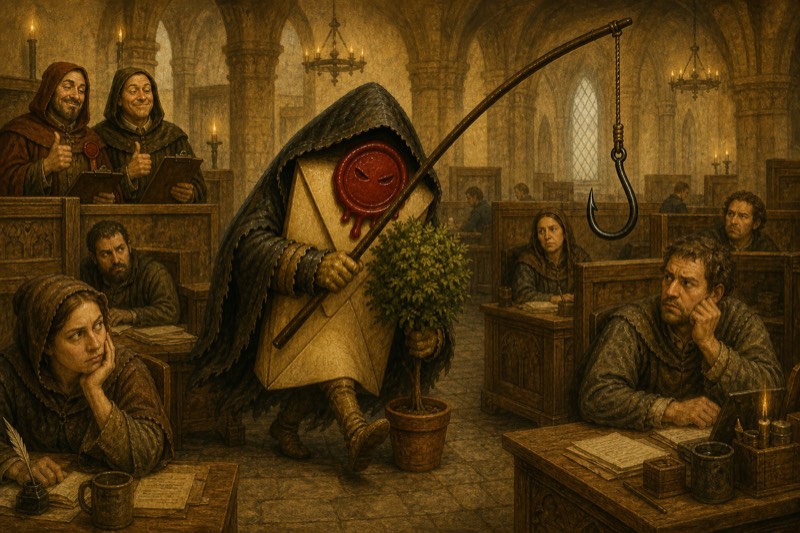
A fortnight after the Boar was named, a merchant was at the gate with a device tuned specifically against it. He had a chart. The Boar was in the corner of the chart. The court bought two.
Nobody has yet established that the Boar exists.
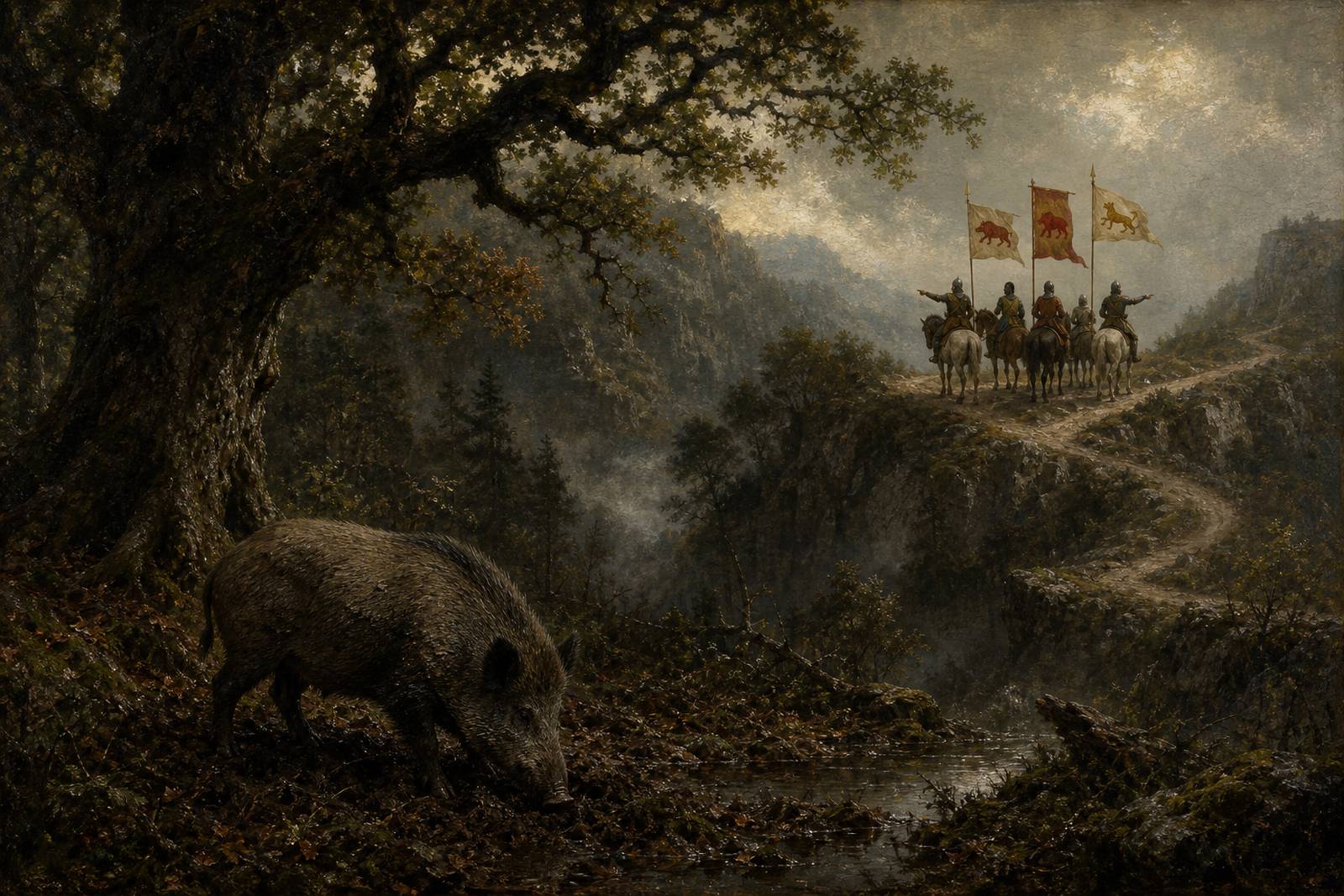
Name your enemy, subject. It is the only way to speak of him, and speaking of him is most of how a kingdom prepares. But hold the name loosely. Somewhere out there is a boar who has never heard of us, going about his business, wholly unaware that he is our nemesis, that we have twice ridden out to meet him, and that we have bought two of something.